Over-the-Counter Sleep Aids
Trouble Sleeping? Try these before prescription sleeping pills

This post provides basic information to consumers on over-the-counter (OTC) sleep-aid medications used for relieving occasional insomnia.
It is my hope that the information, highlighting similarities and differences among various products, will help consumers in choosing a product best suited for their need.
ALL information is intended solely for informational and educational purposes, and NOT to be taken as medical advice.
Even though OTC-medications are available without a prescription, readers are strongly urged to consult an appropriate licensed health care provider before using them.
KEY POINTS
I. OTC-Sleep-Aid products should be used for OCCASIONAL insomnia.
II. Some of the brand name OTC sleep-aid products are:
Compoz Nighttime Sleep AidDormin Original Night-Time SleepGoodSense Nighttime Sleep-AidNytol QuickCapsSominex Nighttime Sleep-AidUnisom Nighttime Sleep AidZzzQuil Ultra Nighttime Sleep AidIII. Some of the OTC sleep-aid products that combine a pain reliever are:
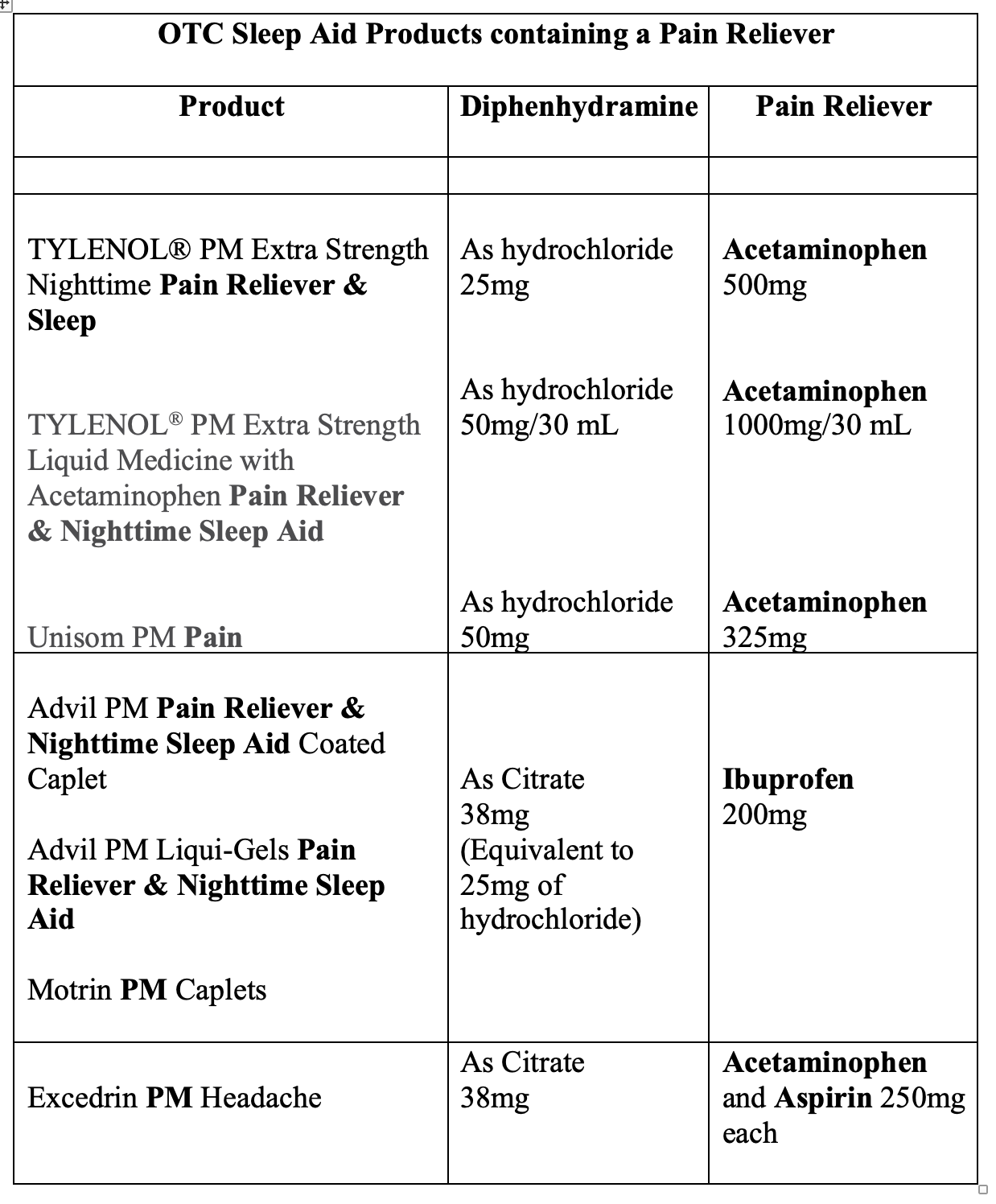
Advil PM Pain Reliever & Nighttime Sleep AidExcedrin PM HeadacheMotrin PM CapletsSilver Rod Pharmacy GNP Pain Relief PMTylenol PM Extra Strength Pain Reliever & Sleep AidUnisom PM PainIV. Active ingredients in OTC sleep-aid products, including those with a pain reliever, are ONE of the following three:
Diphenhydramine (dye-fen-hye-dra-meen)Doxylamine (dox-il-a-meen)Melatonin (meh-lah-toe-nin)V. All three of these active ingredients are non-habit forming.
VI. Diphenhydramine and doxylamine are sedating antihistamines and are also found in many OTC anti-allergy and/or cough/cold products.
VII. Melatonin, a natural hormone that regulates sleep/wake cycle, may be considered a “supplement”, and not a “drug”. Its synthetic version is present in OTC sleep-aid products.
VIII. OTC sleep-aid products are available in several formulations such as tablets, caplets, softgels, gummies, and liquids.
Consumer Scenario:
You suffer from occasional insomnia and, before asking your doctor for a prescription sleeping pill, would like to try some over-the-counter (OTC) medication. Another scenario might be that you have a condition involving pain that prevents you from a restful sleep and would like to try an OTC product that not only treats the pain but also helps in sleep. In both scenarios it would be nice to know of the variety of products from which to choose.
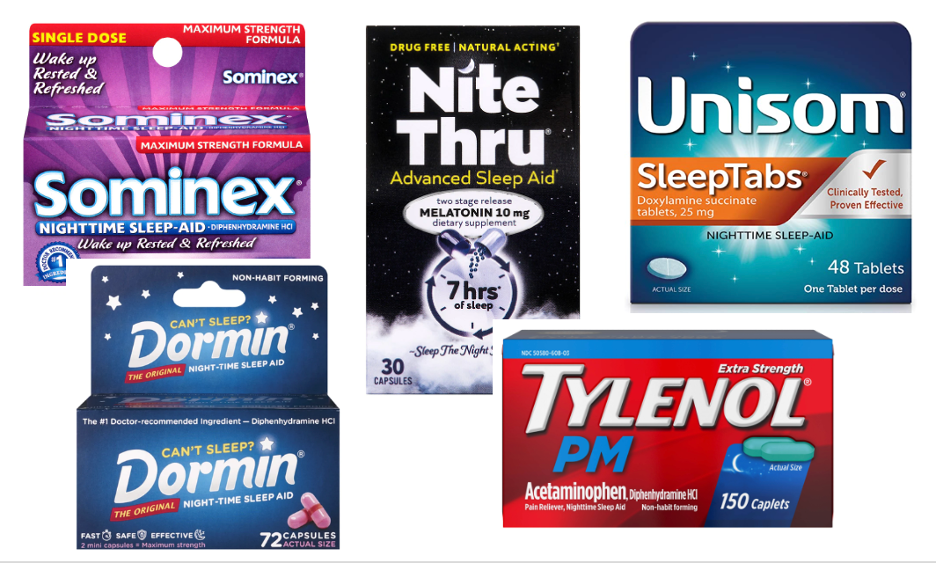
Therefore, as an example, let us take Walgreens sleep-aid products regarding the choices available:
1. Walgreens Sleep Aid Tablets
2. Walgreens Wal-Sleep Z Caplets
3. Walgreens Nighttime Sleep Aid Mini-Caplets
4. Walgreens Sleep II Nighttime Sleep Aid Tablets
5. Walgreens Max Strength Nighttime Sleep Aid Caplets
6. Walgreens Wal-Som Sleep Aid Softgels
7. Walgreens Wal-Sleep Z Syrup
8. Walgreens Melatonin Gummies
Consumer Scenario Bottom Line:
Looking at these eight choices, a consumer might feel overwhelmed and may need some guidance.
As done in all my previous posts, some key tips on OTC sleep-aid products are presented in a Frequently Asked Question (FAQs) format organized in following sections.
Section I: Product Selection based upon Active Ingredients
Section II: Product Selection based upon Formulation
Section III: Selected Brand and Generic Name OTC Sleep-Aid Products
Section IV: Web links to common Brand Names
Note: For tips on approaches to getting a good night sleep without a pill, you may follow these links:
https://www.healthline.com/nutrition/17-tips-to-sleep-better/
https://www.sleepfoundation.org/sleep-hygiene/healthy-sleep-tips/
Section I: Product Selection based upon Active Ingredients
Question:
Looking at the choices of eight Walgreens sleep-aid products listed earlier, is there a way to simplify the information?
Answer:
Indeed, there is way to simplify this information. Let me now present these products in the following table format.
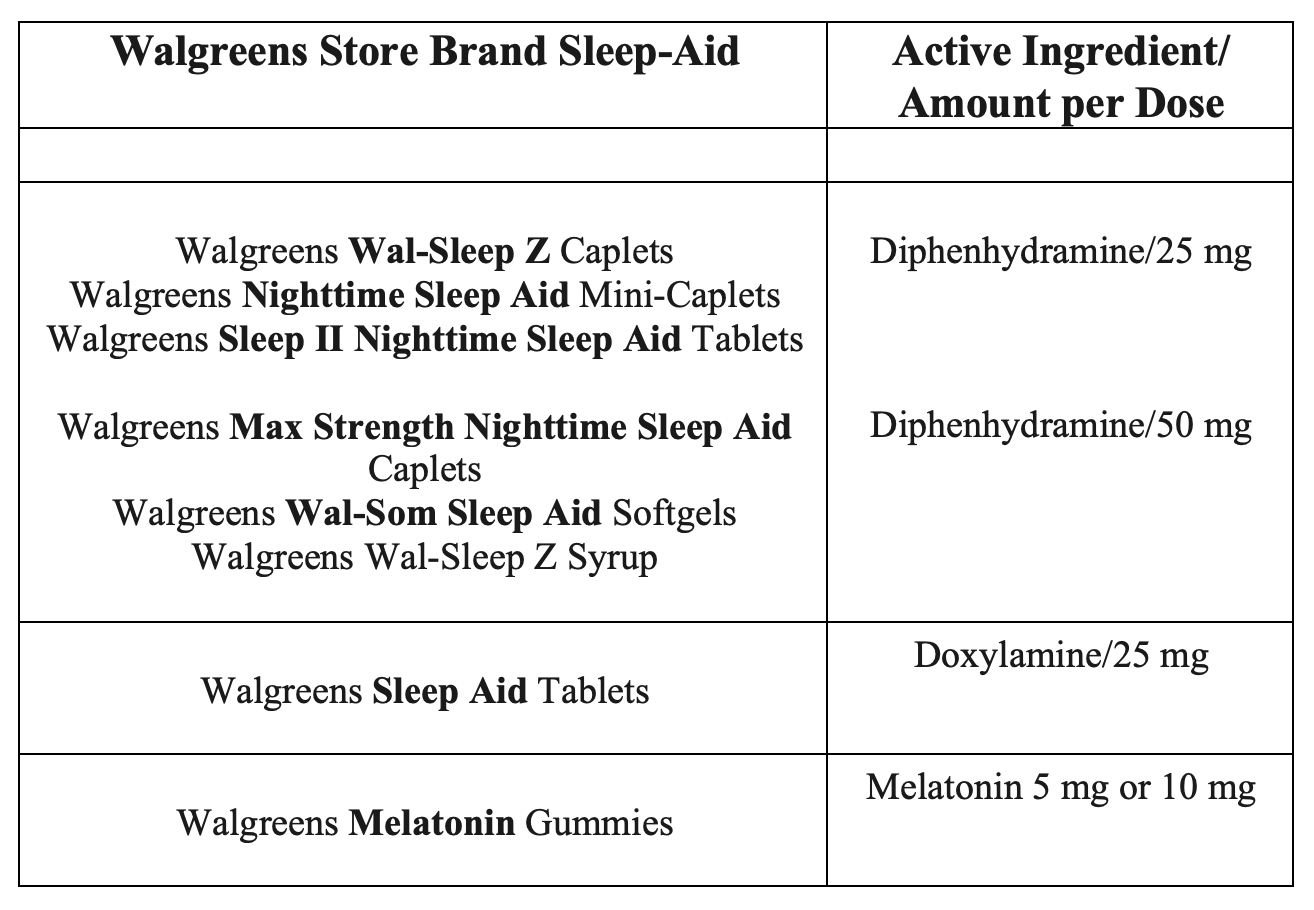
As the table shows, based upon the type of active ingredient, these eight products can be divided into three groups:
Diphenhydramine containing sleep-aids (Diphenhydramine is an antihistamine)
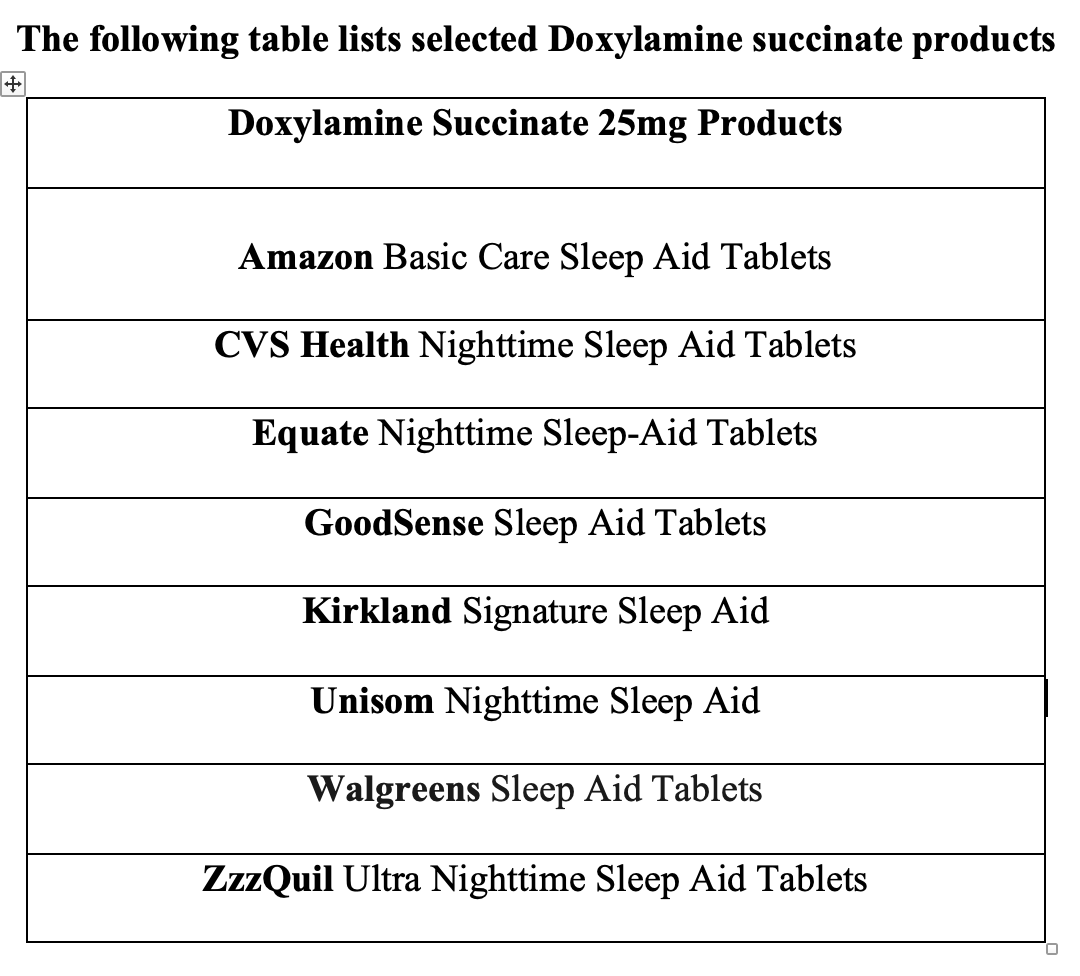
Doxylamine containing sleep aids (Doxylamine is an antihistamine)
Melatonin containing sleep-aids (Melatonin is a natural hormone and may be considered as a “supplement”, and not as a drug.
Question:
To choose between these three, what do I need to know?
Answer:
To help you make an informed choice, let us look at the similarities and differences between diphenhydramine, doxylamine, and melatonin.
First, as a drug category, diphenhydramine and doxylamine are similar while melatonin is different. Both diphenhydramine and doxylamine are synthetic antihistamines while melatonin is a natural hormone. Therefore, melatonin may be regarded as a supplement rather than a drug.
Regarding their potency as sleep-aids, there is a significant difference among the three. Both doxylamine and diphenhydramine have a direct sedative effect in the brain. Doxylamine however has much higher sedative effect than diphenhydramine. Melatonin in contrast does not have a direct sedative effect, but is rather a sleep/wake cycle regulator in the brain. (See below for more details). It is because of this direct sedative effect that both diphenhydramine and doxylamine may cause a hangover effect, and since melatonin does not have a direct sedative effect, it does not cause hangover.
Regarding long-term use, all may lose effectiveness either partially or totally if used too frequently, especially at higher doses. These sleep-aids are meant to be used for occasional insomnia and not for regular or prolonged use. As I noted earlier, consider making lifestyle changes to promote healthy sleep.
Good news is that even though they may lose effectiveness as sleep-aids after prolonged use, they are non-habit forming, as opposed to prescription sleeping pills which are habit forming.
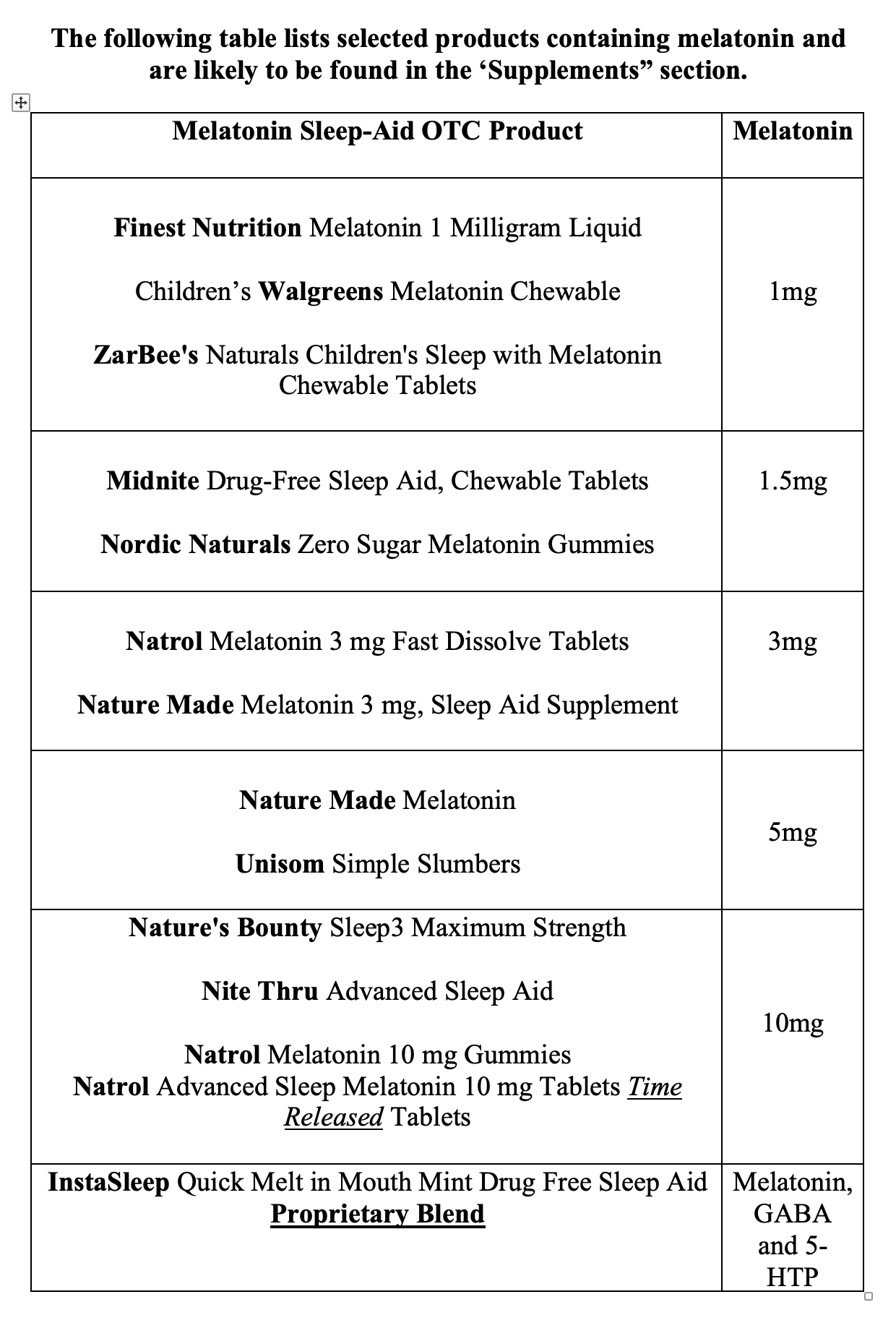
With melatonin, there is a caveat. Taking too much can cause “rebound insomnia” meaning your insomnia may become worse after initial improvement. Since melatonin is available in 1mg to 10mg strengths, it would be advisable to start out with the lowest dose and go up as needed. (See the table later for the listing of various strength melatonin products).
Regarding the dosage required, compared to diphenhydramine and doxylamine, only very small amounts of melatonin are needed to promote sleep. The reason melatonin products contain much higher amounts ranging from 1mg to 10mg per dose is because only about 15% of the oral dose of melatonin is absorbed.
The following two short paragraphs are for those consumers who would like to know just a bit more on sedative antihistamines and melatonin.
Antihistamines are generally known by consumers as anti-allergy drugs. For example, diphenhydramine is present in many OTC anti-allergy and cough/cold products such as Benadryl brand products. But in addition to having anti-allergic effects, both diphenhydramine and doxylamine also have significant direct sedative effects in the brain, and it is because of this that they are utilized as sleep-aids, and may cause hangover.
Melatonin promotes sleep differently.
Melatonin is a natural hormone secreted by the pineal gland in the center of the brain and helps in regulating the body’s sleep cycle. Natural melatonin secretion increases gradually at the start of evening, peaks in the middle of the night, and falls to normal levels by early morning. Although synthetic melatonin present in OTC Sleep-Aids and taken orally does NOT mimic this natural cycle, there is some evidence of its utility in promoting and/or maintaining sleep. Melatonin does not have a direct sedative effect on the brain, and that is why does not cause hangover.Note: Melatonin is well known to help in preventing or reducing jet lag.
Question:
Earlier you said that there are some products that combine a sleep-aid with a pain reliever. Can you comment and give some examples?
Answer:
In this post, we are talking about helping one fall asleep, but if the sleep is disturbed due to presence of pain, use of a mild sleep aid alone may not be sufficient. It is with scenario in mind that a pain reliever is added.
The following table lists some examples of these combination products. Please note that only diphenhydramine, and neither doxylamine nor melatonin, is present in the products.
SECTION II: Product selection based upon formulation
Question:
What basic information do I need to choose between various choices such tablets, capsules, gels, gummies, or liquids?
Answer:
If the amount of active ingredient per dose is same, there is no clinically significant difference in overall efficacy among various formulations.
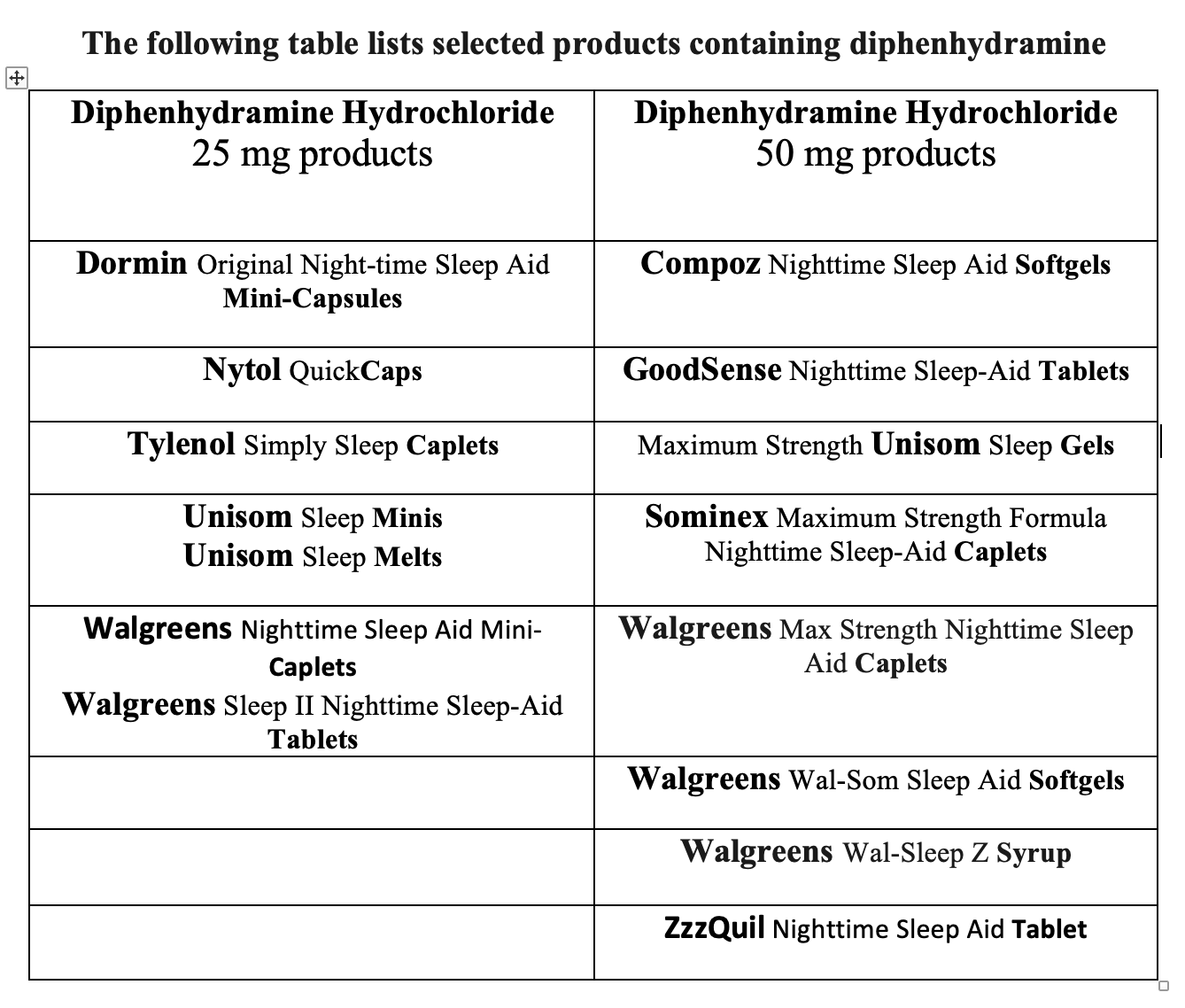
For example, all the following products contain 25mg of diphenhydramine, albeit in different formulations such as caplets, capsules, softgels, melts, or syrup.
Dormin Original Night-Time Sleep Aid Mini-Capsules
Nytol QuickCaps
Tylenol Simply Sleep Caplets
Unisom SleepMinis
Unisom SleepMelts
Walgreens Max Strength Nighttime Sleep Aid Caplets
Walgreens Wal-Som Sleep Aid Softgels
Walgreens Wal-Sleep Z Syrup
Therefore, using these products as examples of 25mg diphenhydramine, your choice of formulation comes to two factors: Patient’s limitations/preference in orally taking one formulation over the other; and price.
Of these, patient limitations are the most important. For example, if a patient has difficulty swallowing large round tablets, smaller and elongated caplets or capsules would be a better choice. Typically, coated preparations are easier to swallow because of having smoother surface than non-coated preparations. For those who generally have trouble swallowing solids, products that are either chewable (e.g., gummies) or melt in the mouth, or liquids would be preferred.
Regarding price, they may differ significantly based upon the formulation. In general, non-coated preparations are least expensive, followed by coated preparations, gels, and liquids in that order. One simple way to compare prices is to look at price per unit/dose. Many retailers such as Walgreens provide such unit price information just below the overall price label.
Section III: Selected Brand and Generic Name OTC Sleep-Aid Products
Before I provide a list of these products, here is a note about “herbal” and other “supplements” that a consumer may encounter as sleep-aids, but not covered in this post as explained below.
A consumer is likely aware of many products labeled as sleep-aids in “Herbals” or “Supplements” sections. Among herbals are examples of a variety of “teas” or similar drinks. These so-called teas contain one or more of several plant products that supposedly provide calm and relaxation, thereby helping one sleep. Most prevalent examples are chamomile, lavender, and lemon balm. Under supplements, many products labeled as sleep-aids contain, in addition to melatonin, chemicals such as GABA, 5-HTP, and L-tryptophan. While all of these are indeed natural substances, and presumed to play some role in sleep, none are FDA-approved as “sleep-aids”. Look for the following disclaimer on these products: This statement has not been evaluated by the Food and Drug Administration. This product is not intended to diagnose, treat, cure, or prevent and disease.Note the following regarding OTC-sleep-aid products:
All OTC-sleep-aid products discussed in this post contain only ONE of the following active ingredients: Diphenhydramine OR Doxylamine OR Melatonin. To the best of authors knowledge there are no combination products in the USA market.
Diphenhydramine products are available in two strengths of 25mg and 50mgDoxylamine products are available in only one strength of 25mg.Diphenhydramine is present in far greater brand name OTC-Sleep-Aid products than doxylamine.Because melatonin is a natural hormone, OTC-Sleep-Aid products containing melatonin may be labeled as “Natural” or as “Drug Free”. Just be aware that melatonin present in these products is the synthetic version.